Author: denise

JoomlaDay™ DACH 2025 – The Highlights

The JoomlaDay™ DACH 2025 is already history again, even though the days in Bad Krozingen were truly wonderful. Here are my highlights:

  • The Encounters: For me – even though I tend to be on the introverted side – the encounters are always the heart of such events. Whether you already knew each other or met for the first time doesn’t matter. You’re among people who think alike. The audience is wonderfully mixed: some run design or marketing agencies, others are developers or offer hosting services, and then you keep running into extension developers you know from some support forum. For example, the entire YOOtheme Pro team attended JoomlaDay. The Joomla Association Switzerland was also present, which of course caught my eye immediately as a Swiss person. And as a woman, you definitely don’t feel «alone in the field». The only downside: I could have used a third day to talk to everyone I still wanted to talk to. 🙂
  • The Talks: After the welcome session, a keynote, and a few programme items, there were five time slots on Friday and six on Saturday, each with three talks running in parallel. One was always held in English for guests from other language regions, and at least one was not Joomla-specific, so you could spend two valuable days there even if you work with another CMS. All talks I attended were very inspiring. Personally, the following contributions were particularly relevant to me (in chronological order 🙂): the talk on CSS View Transitions by Marc Dechèvre, the one on Accessibility Testing Tools by Christiane Maier-Stadtherr, the introduction to Content Types in Joomla with YOOtheme Pro by Hanna Znanewitz, and Thorsten Bastian’s presentation on the Psychology Behind Websites.
  • The Joomla Roadmap: Lessons were truly learned from the chaotic transition from Joomla 3 to 4. A comprehensive roadmap for upcoming Joomla versions was created. Just last month, Joomla 6 was released, and the roadmap gives us a clear outlook all the way to Version 8, planned for October 2029. The focus is now on meeting deadlines rather than fulfilling an endless feature wishlist. I think that’s a great development because it avoids situations like the Joomla 4 release, when the date was postponed again and again. That unsettled many users, including myself. Actually, more than unsettled – but let’s leave it at that. Today, I can say with complete confidence that my trust in Joomla has been restored.
  • Another thing I really enjoyed seeing was that Google is supporting Joomla above average in the Google Summer of Code project. As I learned in Martin Kopp’s talk, Google co-funded four Joomla projects in 2025 that will improve the CMS in the future.
  • The Supporting Programme: The welcome sessions and keynotes were engaging and entertaining. On Saturday morning, we even started the day with a breathing-technique session. There were plenty of breaks, and everyone was very well taken care of.
  • The Speed-Dating: At first I was a bit sceptical. Was this really a singles’ event? I wrote above that I was «among people who think alike». Anything is possible. 🙂 But in the end, it was simply a classic opportunity to meet as many people as possible in a short time. Classic, but very effective and exciting.
  • The “Make it happen” Session: I didn’t know this format yet, but I loved it. There were different topics, and people jumped straight into action. As a coder, you could join a group working on bugs; otherwise, you could help with documentation, for example. Or take a quick break to assist clients who suddenly needed urgent support (Hi M.! 😁).
  • The J!Otto Awards: These are awards given to Joomla websites in various categories. For the first time, a website was honoured in the new “Accessible Websites” category. The winner was Angie Radkte with her work for Hagener Entsorgungsbetrieb: heb-hagen.de. All other winning websites can be viewed at jotto-deutschland.de.
  • Dealing with AI: It sometimes bothers me when AI triggers an unreflective wave of enthusiasm. That wasn’t the case here at all. In the various talks, AI was neither demonised nor glorified as the only truth, but seen as an opportunity. Sebastian Mohila’s talk on using AI in Joomla! websites in particular got me thinking. He’s developing an AI chatbot, and chatbots always give me a slightly uneasy feeling because they remove a bit of the human touch from the first contact. On the other hand, one shouldn’t shut oneself off from this technology either. In the end, it’s like almost everything: you just need to find the right use case, and then it becomes an asset. Even with AI, you can trust your gut feeling.


After the closing session, those who wanted could meet for dinner at a restaurant. Since I had already missed the pre-event, I was happy to join. And so I ended the evening with a delicious Syrian tagine and the best company. It was one of those moments when I simply felt grateful for having such a good life. Thank you, dear Joomla community, and thank you, dear organising team – JoomlaDay™ DACH 2025 was truly fantastic, and I’m already looking forward to next year!


Selfie von Denise vor einer Mauer mit einer gesprayten Mick Jagger-Karikatur, aus dessen Mund das Wort «Rock» als Schriftzug kommt.
JoomlaDay rocked! The venue in Bad Krozingen also featured several artistic highlights, including this tunnel full of caricatures.

“I’m of no use anymore” – When Hope Fades

On the 5th World Day for Grandparents and the Elderly

“I’m of no use anymore.” These four words, spoken softly by my 96-year-old grandfather after my grandmother’s funeral, still echo in my heart. Quiet and resigned, as if he had already taken leave of life.

The theme for this year’s World Day for Grandparents and the Elderly is “Blessed are those who have not lost hope”. But what happens when hope does fade?

When Old Age Becomes a Burden

Depression in old age doesn’t fit neatly into our idealised image of ageing with grace — of wise grandparents sharing their life experiences with a gentle smile. Yet in reality, in Switzerland, around 16% of women and nearly 8% of men over 65 suffer from moderate to severe psychological distress (source: Pro Senectute). The numbers rise significantly with age and among people with dementia.

There are many triggers: the loss of a partner, physical limitations, or the painful feeling of being useless.

How We Can Respond

Important: What follows are approaches that we as non-professionals can try. When depression becomes severe or persistent, professional help is essential.

1. Acknowledge the pain instead of brushing it aside: When my grandmother — who had dementia — often cried in the care home because she wanted to “go home”, telling her “But you’re doing fine here” never helped. Instead, I tried this: “I’m so sorry you’re feeling this way. I wish things were different.”
She took my hand and thanked me for listening. Later, I sometimes simply held her and cried with her.

2. Mirror their own logic: With my physically healthy grandfather, who felt useless, I took another approach. I asked him: “Did you ever think Grandma was of no use anymore?” He answered indignantly, “Of course not!” “Did you ever feel she was too much for us?” Again, “No,” but this time, more thoughtfully. “Then please believe me when I say: we don’t see you as useless either. You gave us so much over so many decades. Now we’re giving back with all our hearts.” He thanked me — and smiled again.

3. Restore old rituals: Shortly after moving into a care home, my grandfather relapsed into deep depression. It was around Christmas, and he had refused any care beyond hospice level. He wanted to die. Handling this could fill an entire blog post — but for now, let’s just say: it wasn’t his time yet. I struggled to make his days more bearable.
One day, desperate in a bakery looking for something sweet (he could have lived off custard slices), I noticed a stack of small boxes wrapped as tiny gifts. Suddenly, I remembered: he always gave his visitors a little something when they left. So I bought ten of these gifts and brought them to him: “Here, you can either eat them yourself or give them away — if you think someone deserves one.” (Spoiler: I didn’t get one, but my aunt got three 😆). Before my next visit, he called me: “Could you bring me 15 more of those gifts?”
I could have cried. It was the first wish he’d expressed in weeks that wasn’t about his funeral.

Every Person Has a Purpose

What always seemed to help — and what I deeply believe — is something Pope Francis said:
Every person has a purpose. Always. Even if my grandfather couldn’t see it himself, he still had one.

We often make the mistake of thinking that only giving has value. “It is more blessed to give than to receive” — but we forget that receiving allows someone else the joy of giving. A person who refuses to receive also denies others that gift.

In caring for the elderly — with or without dementia — we also catch a glimpse of what awaits us. We learn empathy. And perhaps, we begin to understand what we should do while we still can.

Until the Very End

My grandfather wrestled with the thought that he was no longer useful right up to the end. Only on his deathbed did he finally make peace with it. He accepted the one task that even the dying still hold:
to let others love them and express their gratitude.

He thanked us — not with words, as he could no longer speak — but with a gesture. Also, from now on he held our hands tightly, especially when we said we were about to leave. We didn’t say this because we wanted to go — but out of respect, because in his healthier days, he would send us away when he got tired. He didn’t want to burden anyone. At the very end, he let that wall fall. He let us walk that final path together, as a family. Each of us in our own way, able to stay or go — without second-guessing whether he would prefer to be alone.

A Gift of Hope

Hope isn’t something we either have or don’t have.
Hope is something we can give each other. Today is a good day to say something kind to the older people in our lives. Because sometimes, it only takes our words to bring hope back to life.

A person’s worth does not lie in their independence or achievements. It lies in their being.

Get in touch

Back to blog

Continue reading

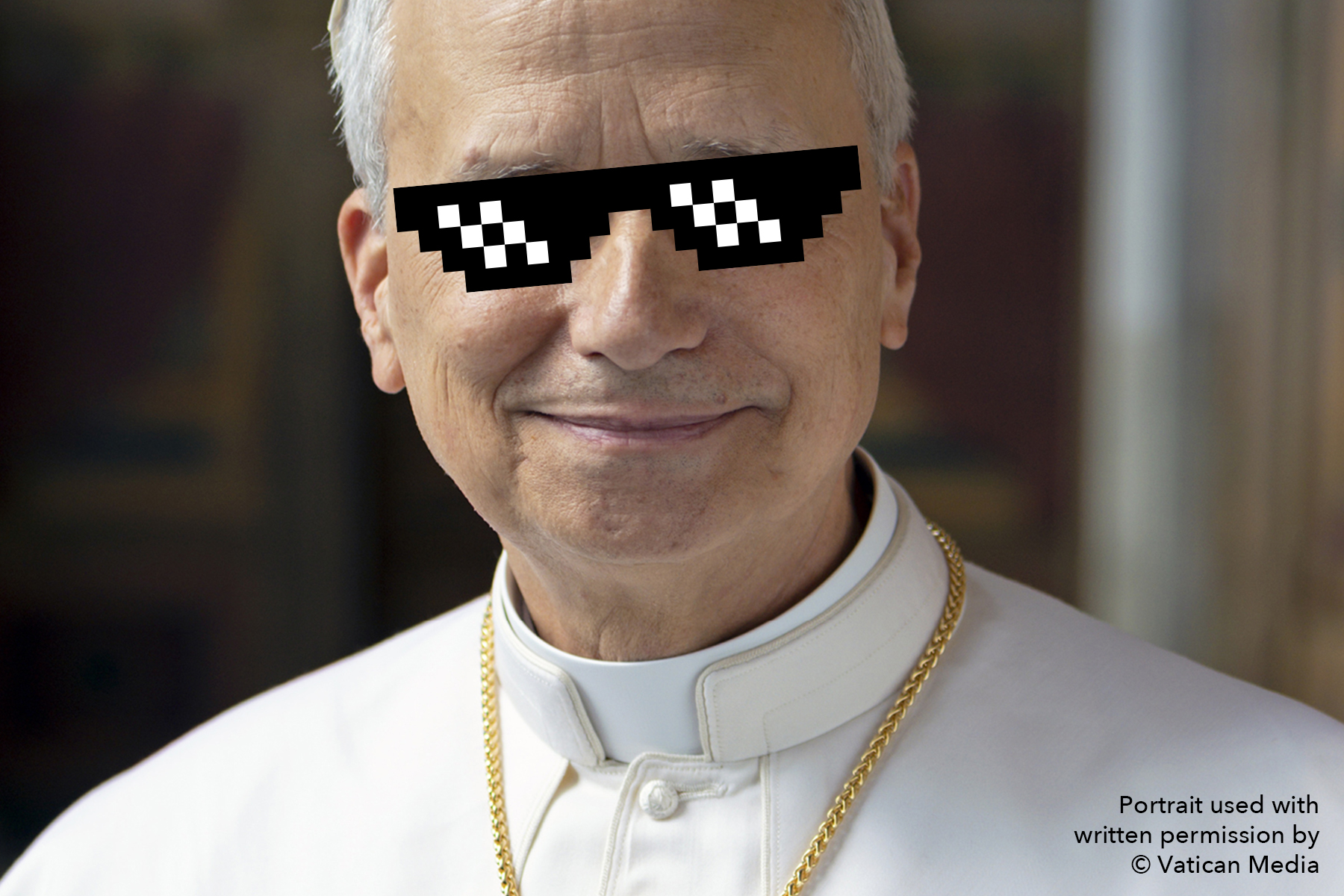
Leo XIV. – The Cyber Pope?

Recently, I said something in a conversation that surprised even me: “Fifteen years ago, we’d still say ‘Oh, that conservative guy in Rome…’ and now it feels like with Pope Francis, the last great bearer of hope has passed away.” Interestingly, instead of odd looks, I received a lot of agreement – even though the group I was talking to was very diverse.

And now we have Leo XIV, speaking about Artificial Intelligence. Just days after his election, he’s already been photographed with his smartphone more times than Francis was during his entire papacy – or at least that’s how it feels.

And suddenly I catch myself skimming through Leo XIV’s speeches, hoping to find answers to my AI questions. What is happening?

The New Pope and the AI Revolution

Leo XIV explicitly mentions artificial intelligence as one of the reasons behind his choice of name: “There are different reasons for this, but mainly because Pope Leo XIII in his historic Encyclical “Rerum Novarum” addressed the social question in the context of the first great industrial revolution. In our own day, the Church offers to everyone the treasury of her social teaching in response to another industrial revolution and to developments in the field of artificial intelligence that pose new challenges for the defence of human dignity, justice and labour.” ¹

For me personally, this moment marks the first time the Church has visibly entered my digital present – the one I actually live in. Even though – and I think this is important to emphasize – Pope Francis laid the groundwork and was definitely grounded in the present. Still, he was many things, but not exactly a “tech wizard.”

Leo XIV: The First Silver Surfer Among the Successors of Peter

Pope Leo XIV, on the other hand, is a true “Silver Surfer.” Though he didn’t grow up with digital media, he uses it with ease. On the very day of his election, a video circulated showing him FaceTiming his brother, skipping any greeting and going straight to: “Why didn’t you answer your phone?”

A hint of “instant mentality”, a symptom of modern communication culture?

Leo XIV or Leo 14.0?

Will Leo XIV become the first pope to have his speeches written by ChatGPT? Will we soon see JesuIT – the ultimate custom GPT from the Vatican? I hope not. I hope that at least in this area, we’ll hold on to the roots of humanity. Analog and certain that no hallucinating AI was involved.

But maybe he is already using AI as a tool? If so, I’d be totally fine with that. In fact, I’d be very interested if Leo XIV shared insights into how he’s using AI – if at all. Especially because those two worlds seem so far apart.

The Tightrope Walk Between Fascination and Concern

We’re living in an era full of disinformation, uncertainty, and digital overload, while AI is evolving at breakneck speed. Technically, I find it all incredibly exciting. Ethically, to be honest, it worries me. Will we even be able to trust anything in the future?

The more information we’re bombarded with, the harder it becomes to discern what’s true, relevant – or even still human. It’s no wonder that people long for something to hold onto. Maybe it’s this very desire that drives even non-religious people toward places of higher meaning – like the Church. Not because they offer all the answers, but because they can be a fixed point in the chaos. Less speed, more depth. That’s why it could become truly interesting if Pope Leo XIV really begins to speak out about AI.

So far, Leo XIV has made statements like: communication is not just about information, but the creation of culture or that the enormous potential of AI requires responsibility and discernment “in order to ensure that it can be used for the good of all.” ² At first glance, nothing revolutionary. And yet: He’s putting his finger on the wound and raising expectations – perhaps for his first encyclical? #instantmentality

Clash of Controversies

To conclude – all these thoughts I’m putting into words here are proof of just how much change is happening in our world right now. It feels like we’re inside a cocktail shaker. Controversial topics are colliding and reordering themselves.

Regardless of which actors should or should not be involved – maybe there really is hope. Hope that we’ll break free from the obsession with unhealthy growth and refocus on what makes us better as a human family. Or are we just creating new templates to further divide society?

Questions upon questions…

How do you experience the interplay between AI, ethics, and spirituality?
Let me know – I’d love to hear your perspective!

Send me an email

zurück zum Blog

Continue reading