“I’m of no use anymore” – When Hope Fades
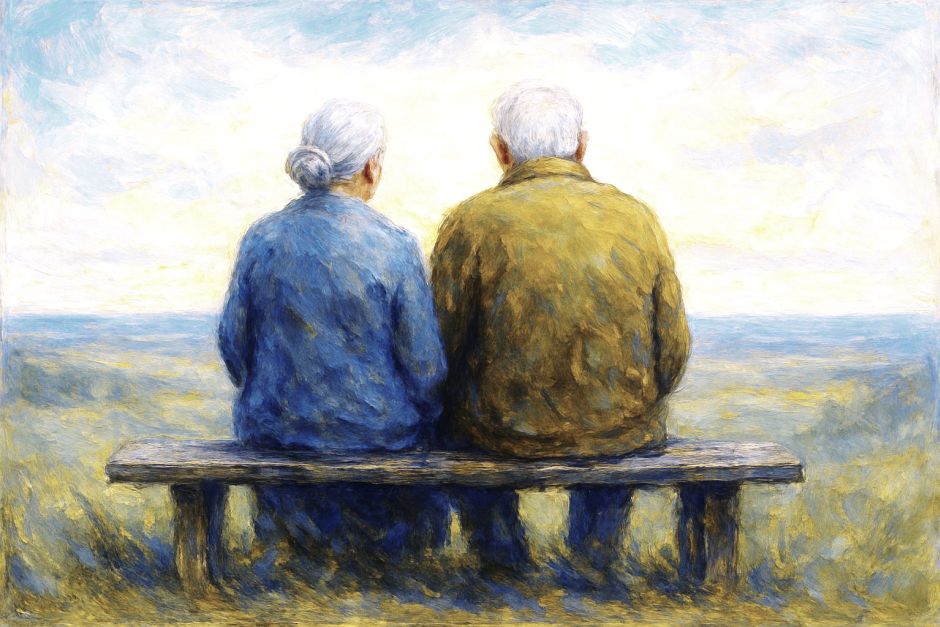
On the 5th World Day for Grandparents and the Elderly
“I’m of no use anymore.” These four words, spoken softly by my 96-year-old grandfather after my grandmother’s funeral, still echo in my heart. Quiet and resigned, as if he had already taken leave of life.
The theme for this year’s World Day for Grandparents and the Elderly is “Blessed are those who have not lost hope”. But what happens when hope does fade?
When Old Age Becomes a Burden
Depression in old age doesn’t fit neatly into our idealised image of ageing with grace — of wise grandparents sharing their life experiences with a gentle smile. Yet in reality, in Switzerland, around 16% of women and nearly 8% of men over 65 suffer from moderate to severe psychological distress (source: Pro Senectute). The numbers rise significantly with age and among people with dementia.
There are many triggers: the loss of a partner, physical limitations, or the painful feeling of being useless.
How We Can Respond
Important: What follows are approaches that we as non-professionals can try. When depression becomes severe or persistent, professional help is essential.
1. Acknowledge the pain instead of brushing it aside: When my grandmother — who had dementia — often cried in the care home because she wanted to “go home”, telling her “But you’re doing fine here” never helped. Instead, I tried this: “I’m so sorry you’re feeling this way. I wish things were different.”
She took my hand and thanked me for listening. Later, I sometimes simply held her and cried with her.
2. Mirror their own logic: With my physically healthy grandfather, who felt useless, I took another approach. I asked him: “Did you ever think Grandma was of no use anymore?” He answered indignantly, “Of course not!” “Did you ever feel she was too much for us?” Again, “No,” but this time, more thoughtfully. “Then please believe me when I say: we don’t see you as useless either. You gave us so much over so many decades. Now we’re giving back with all our hearts.” He thanked me — and smiled again.
3. Restore old rituals: Shortly after moving into a care home, my grandfather relapsed into deep depression. It was around Christmas, and he had refused any care beyond hospice level. He wanted to die. Handling this could fill an entire blog post — but for now, let’s just say: it wasn’t his time yet. I struggled to make his days more bearable.
One day, desperate in a bakery looking for something sweet (he could have lived off custard slices), I noticed a stack of small boxes wrapped as tiny gifts. Suddenly, I remembered: he always gave his visitors a little something when they left. So I bought ten of these gifts and brought them to him: “Here, you can either eat them yourself or give them away — if you think someone deserves one.” (Spoiler: I didn’t get one, but my aunt got three 😆). Before my next visit, he called me: “Could you bring me 15 more of those gifts?”
I could have cried. It was the first wish he’d expressed in weeks that wasn’t about his funeral.
Every Person Has a Purpose
What always seemed to help — and what I deeply believe — is something Pope Francis said:
Every person has a purpose. Always. Even if my grandfather couldn’t see it himself, he still had one.
We often make the mistake of thinking that only giving has value. “It is more blessed to give than to receive” — but we forget that receiving allows someone else the joy of giving. A person who refuses to receive also denies others that gift.
In caring for the elderly — with or without dementia — we also catch a glimpse of what awaits us. We learn empathy. And perhaps, we begin to understand what we should do while we still can.
Until the Very End
My grandfather wrestled with the thought that he was no longer useful right up to the end. Only on his deathbed did he finally make peace with it. He accepted the one task that even the dying still hold:
to let others love them and express their gratitude.
He thanked us — not with words, as he could no longer speak — but with a gesture. Also, from now on he held our hands tightly, especially when we said we were about to leave. We didn’t say this because we wanted to go — but out of respect, because in his healthier days, he would send us away when he got tired. He didn’t want to burden anyone. At the very end, he let that wall fall. He let us walk that final path together, as a family. Each of us in our own way, able to stay or go — without second-guessing whether he would prefer to be alone.
A Gift of Hope
Hope isn’t something we either have or don’t have.
Hope is something we can give each other. Today is a good day to say something kind to the older people in our lives. Because sometimes, it only takes our words to bring hope back to life.
A person’s worth does not lie in their independence or achievements. It lies in their being.